
Everything I learned about teaching I learned from gangsters. I say that with the utmost respect and affection – I loved my students, even though they were probably the most unlovable humans on the face of the earth. But I learned to love them. They taught me.
In November of 2012, I applied for a job at an alternative high school in the metro Detroit area. I was called for an interview, and when I showed up at the school I was more than a little tentative. I sat in the car and texted my mom, “It’s a shithole. I don’t even want to go in for the interview.” In her usual up front manner, she texted back, “Don’t go in then.” I don’t know why, but I collected myself and went into the building.
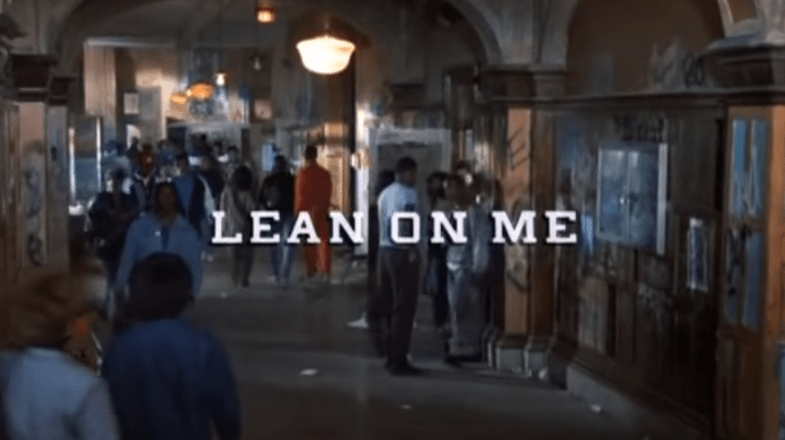
When I walked in, all I could think about was the opening scene of the movie “Lean on Me.” I told myself that I would sit through the interview, but I didn’t have to take the job – if they even offered it to me.
I didn’t even make it home before they called me to offer me the job.
My students used to ask me all the time why I would want to work there. To be honest, I don’t know if I really knew why I wanted to work there. I had decided to change careers after working as an engineer for nearly eight years, and it was my first job as a newly certified teacher. When I left my engineering job, all I knew was that I wanted to stay home with my kids in the summer. I had always enjoyed coaching softball, so I thought teaching would be a good fit. Of course, I had to find a really fancy way of saying it when I was required to draft a philosophy statement to earn my certification.
As a teacher, I will be committed to making sure that every student has the opportunity to choose his or her own destiny. I believe that everyone is capable of learning, and I never allow students to utter the statement, “I’m not a math person.” I believe that the most valuable lessons learned in school are not always academic. No matter what classes I end up teaching, my highest goal is to teach my students how to think. Students who know how to think are prepared to interact intelligently with the world around them. This is, after all, the purpose of education. It’s not about math, it’s about life.
Philosophy of Teaching – November, 2012
During my tenure there, every time someone asked me “why?” I would respond, “Someone has to.” It was a lame response, but my philosophy just didn’t fit. It was pie in the sky. And I knew I couldn’t save them. I couldn’t be a hero. I always wished I could be one of those teachers that had the power to inspire students to greatness – like the teachers that are always portrayed in the movies. But I was too acquainted with their reality. At the end of every day, my gangsters were going back to a hopeless, empty existence no matter what I said or did.
And then, something changed. Someone asked me “why?” And I knew. I’m not sure how I knew, I just knew. I looked at my class and said, “I have no idea why I took this job; but I know without a doubt why I stayed.” It was them. I was there for them. I couldn’t save them. I couldn’t inspire them. But I could love them. And maybe even teach them a little math along the way.
 ing together. Whenever I have used groups in the past, there were always students who were not working, students having side conversations, and students who just did not seem to get along with those in the group. I wanted to do an activity that would model the ideals of good teamwork. Development of the skills required for effective collaboration takes practice. We are so busy trying to hit our content standards, that we don’t always recognize the value of spending time teaching “soft skills” such as communication and teamwork. As a result, these skills are often lacking in many professional working environments.
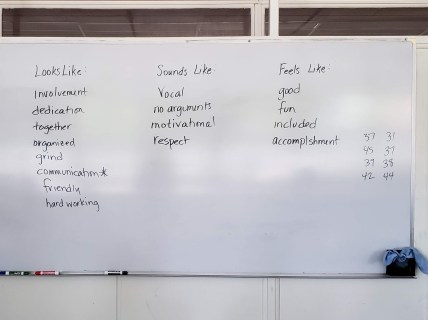 After the second round, nearly all of the groups had improved. There was even one group that found all 100 numbers! I then had them make three columns on a sheet of paper. In the first column, I wanted them to write down words that describe what an effective group looks like. In the second column, I asked them to describe what an effective group sounds like. And in the third column, they were to describe what an effective group feels like. I let them talk for a few minutes, and then as a class, we had a quick discussion of the qualities of effective group work. I projected a picture of the class that I had taken while they were working. They were quite shocked that they did not even notice me taking pictures. I asked them if the students in the picture looked focused, determined, and engaged. It was clear that they were.
 dents are walking through my door. Certainly they must know by now whether or not they are “good” at math – most of them are juniors and seniors in high school. They’ve never done well in a math class before, why would this one be any different?

 and said,
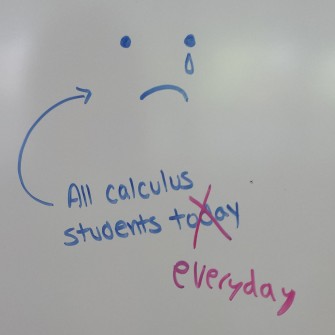 Enter: AP Calculus. I am extremely hard on these students. On purpose. From the moment they walk in the door, they are pummeled with a big fat reality check. It starts when I give them each a packet of letters written to them at the conclusion of the school year by the previous AP Calc class. The letters usually describe horrors that these honors students have never dreamed they might experience. Last year’s students discuss their first failures, lowest grades ever, and how they might not ever understand math again. They talk about how Russo doesn’t grade (or check) homework and they fell into the trap of not doing it – even though they knew they probably should have. It is not uncommon for me to have several Calc students cry in my classroom because of their grades. They feel like they are rolling downhill with no brakes; and they have no control over where they are headed.

 The first book I read this summer was The Classroom Chef by John Stevens and Matt Vaudrey. There were so many
  is one is easy – bring some music into the classroom. I’ve always wanted to do this, but it’s been pretty low on my list of priorities. This summer, I bought myself a bluetooth wireless speaker and compiled a list of really great motivational music as well as some stuff that just makes you want to dance. When I first started teaching, I used Pink Floyd’s “Learning to Fly” to introduce a particularly difficult project. I began by passing out a copy of the lyrics and asking students to read them. As most of these students were unfamiliar with the song, we had a short discussion about what the words meant. As expected, the students stuck to the literal interpretation of the lyrics, someone is learning how to fly an airplane. After the short discussion, I played a
 Stranger in a Strange Land